Take a look around your home for a second. Smart TVs. Streaming boxes. Phones. Tablets. Laptops. Doorbells. Security cameras. Gaming systems. Smart thermostats. Sonos speakers. Alexa devices. Zoom calls. FaceTime. Wi-Fi calling. Remote work. Online school. TikTok. Netflix. YouTube.
Modern homes are no longer just using Wi-Fi for “internet browsing.”
Today, Wi-Fi is the lifeblood of the connected home. In many ways, it’s quickly becoming the third utility right alongside water and electricity. And if you have kids or teenagers in the house… some might argue it’s becoming even more important than water and electric. (at least according to them — haha.)
Not All Wi-Fi Systems Are Created Equal
One of the biggest misconceptions homeowners have is this:
“If I have fast internet from my provider, I should automatically have good Wi-Fi.”
Unfortunately, that’s not how it works.
Your internet provider (Xfinity, AT&T, etc.) delivers internet to the house.
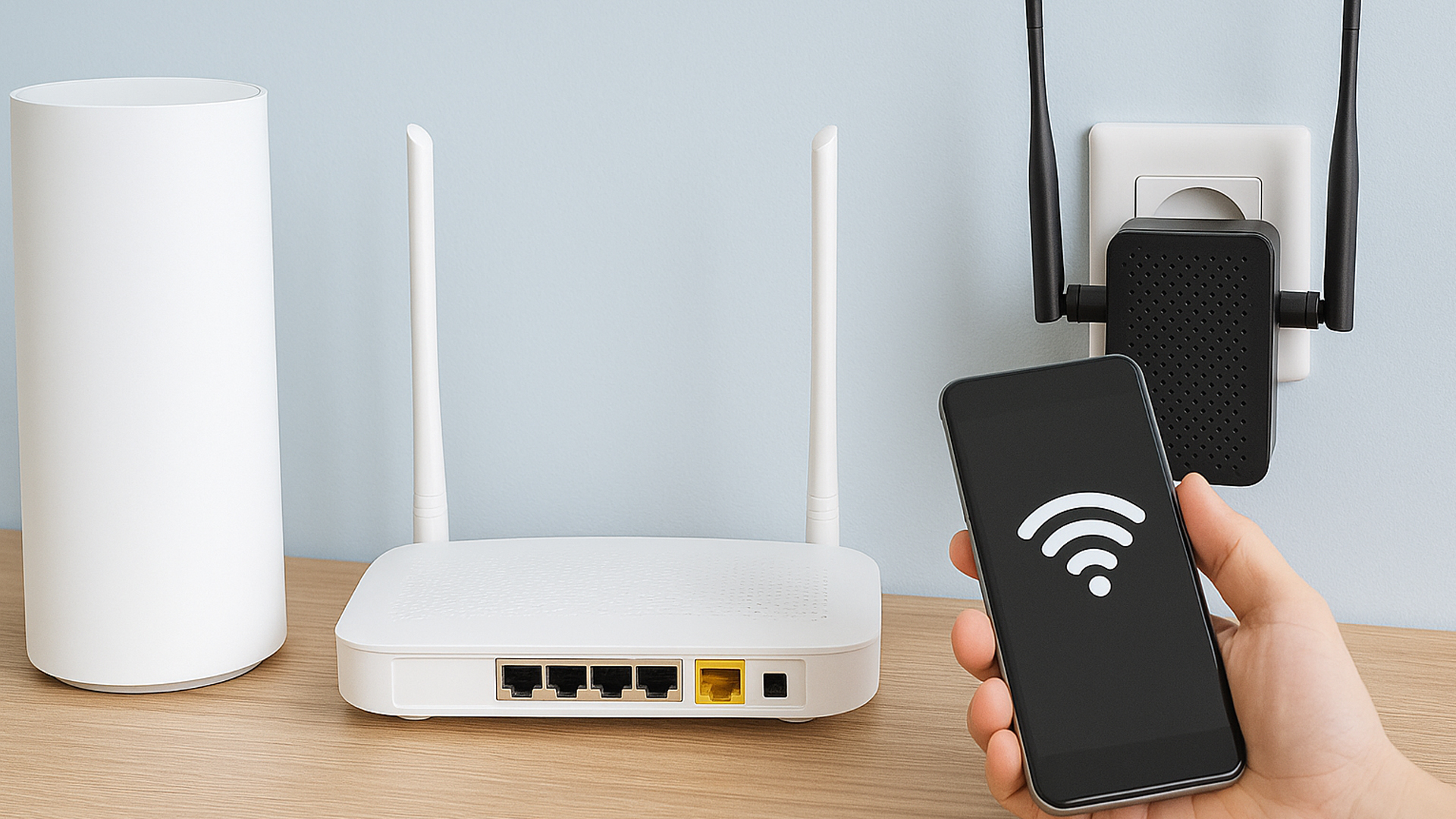
Your Wi-Fi system is what distributes that connection throughout the house.
That’s a huge difference.
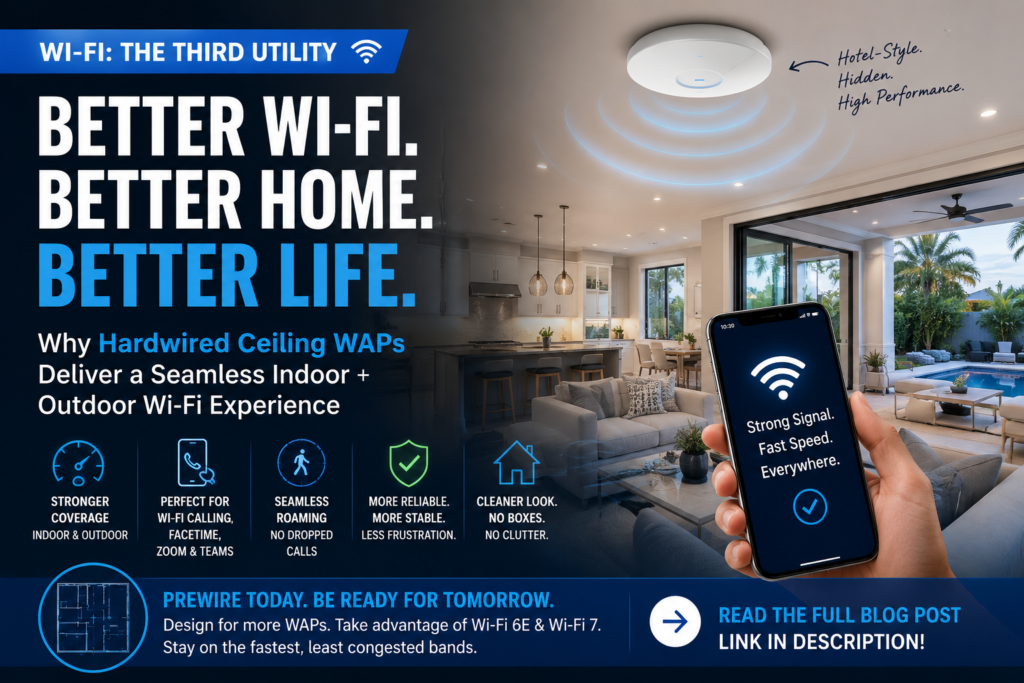
The Problem with Relying Only on the ISP Router
Most ISP routers are installed:
- In a laundry room
- Inside a metal or plastic low voltage panel
- In a closet
- On one side of the home
The problem?
Wi-Fi signals weaken dramatically through:
- Walls
- Bathrooms
- Kitchens
- Mirrors
- Tile
- Concrete
- Metal
- Large homes
- Outdoor areas
This creates:
- Dead spots
- Weak signals
- Dropped Zoom calls
- Poor FaceTime quality
- Buffering TVs
- Music stalls
- Laggy gaming
- Choppy Wi-Fi calling
- Frustrated family members
And in today’s work-from-home world, weak Wi-Fi isn’t just annoying anymore — it can affect productivity, meetings, communication, and even business.
The Solution: Hardwired Ceiling Wi-Fi Access Points (WAPs)
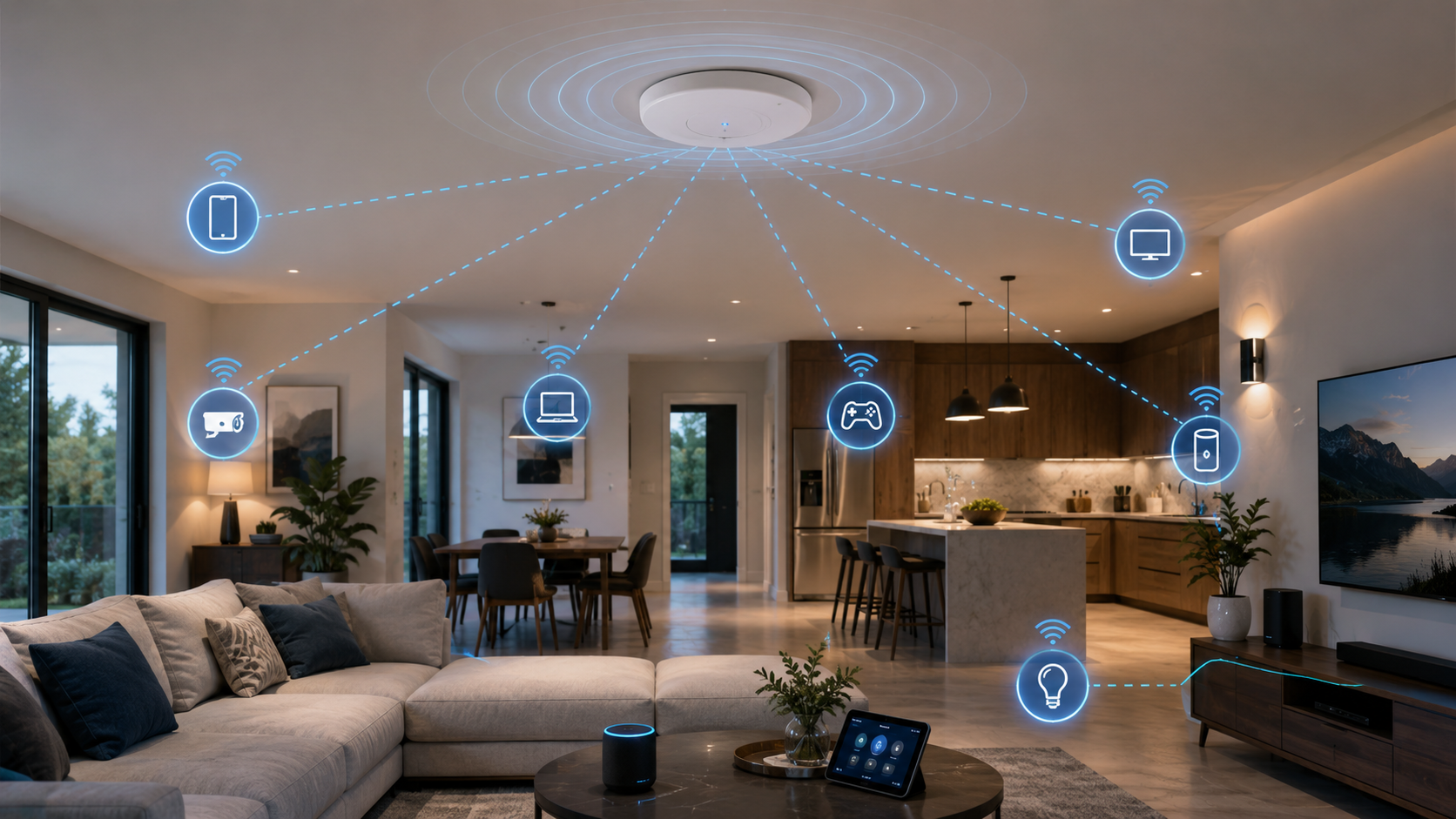
A professionally designed Wi-Fi system uses multiple strategically placed ceiling-mounted Wireless Access Points (WAPs) throughout the home.
These are NOT basic “Wi-Fi extenders.”
They are enterprise-grade Wi-Fi devices connected back to your network using dedicated Cat6 Ethernet cabling.
That hardwired connection is the magic.
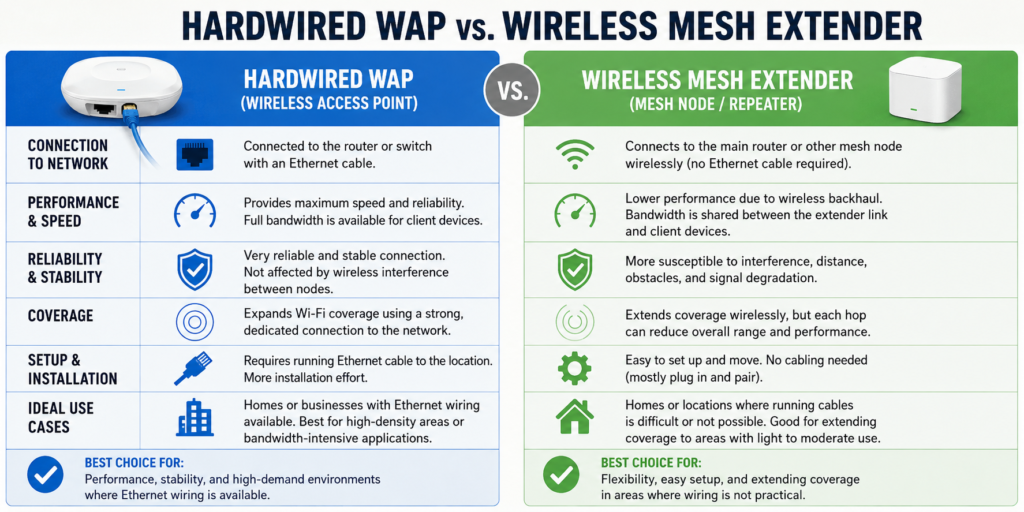
Why Hardwired WAPs Perform Better Than Wireless Mesh Extenders
Wireless mesh extenders communicate with each other wirelessly.
That means:
- They still depend on signal strength
- They can suffer from interference
- Each wireless “hop” can reduce performance
Hardwired WAPs are different.
Each ceiling WAP has its own dedicated wired connection directly back to the network switch/router.
That gives you:
- Faster speeds
- Better stability
- Lower latency
- Stronger coverage
- Better reliability
- Better roaming between rooms
- Better performance outdoors
Think of it like this:
Wireless Mesh
Like passing buckets of water person-to-person.
Hardwired WAPs
Like every room having its own direct water pipe.
Better Coverage AND Better Aesthetics
There’s another major benefit homeowners often overlook:
Ceiling-mounted WAPs simply look cleaner.
Professionally installed ceiling WAPs are designed to blend into the home — similar to what you see in:
- Luxury hotels
- Modern office buildings
- Commercial spaces
- High-end smart homes
Instead of:
- Boxes sitting on countertops
- Routers on nightstands
- Mesh nodes on dressers
- Equipment cluttering cabinets and shelves
…you get a much cleaner and more intentional design.
Most modern ceiling WAPs are:
- Low profile
- Minimalistic
- Paint-friendly
- Designed to visually disappear into the ceiling
At the same time, ceiling placement also improves performance because the Wi-Fi signal can radiate outward more evenly and efficiently throughout the home.
So you’re improving:
- Coverage
- Reliability
- Roaming
- AND aesthetics
at the same time.
Seamless Roaming = The Secret Sauce
One of the biggest benefits of a properly designed hardwired Wi-Fi system is something called:
Advanced Wi-Fi Roaming
This allows your phone, tablet, or laptop to seamlessly move between access points without dropping the connection.
That matters A LOT for:
- Wi-Fi calling
- FaceTime
- Zoom
- Microsoft Teams
- Streaming music
- Video conferencing
- Walking room-to-room during calls
Without proper roaming, devices often “stick” to weaker signals longer than they should.
That’s why calls suddenly become choppy or freeze even though you technically still “have Wi-Fi.”
A professionally designed hardwired WAP system helps your devices intelligently transition to the strongest signal automatically.
This Is Especially Important If Cellular Signal Inside the Home Is Poor
Many newer homes have:
- Concrete block construction
- Impact windows
- Foil insulation
- Energy-efficient materials
These materials are fantastic for hurricanes and energy savings…
…but terrible for cellular signal penetration.
That means many homeowners now rely heavily on:
Wi-Fi Calling
If your Wi-Fi is weak, your cell phone experience becomes weak too.
A strong whole-home Wi-Fi system dramatically improves:
- Call quality
- Reliability
- Text messaging
- FaceTime
- Video chats
- Mobile connectivity indoors
Why Designing & Prewiring for WAPs Matters
The BEST time to build a high-performance Wi-Fi system is during construction.
Why?
Because once drywall is complete:
- Running new wires becomes harder
- Costs increase dramatically
- Placement options become limited
Prewiring for ceiling WAPs gives homeowners flexibility both now and in the future.
And the future matters more than ever because Wi-Fi technology is evolving rapidly — especially with the rise of:
Wi-Fi 6e and Wi-Fi 7
These newer technologies unlock:
- Faster speeds
- Lower latency
- Better device handling
- Access to the newer 6 GHz wireless spectrum
But there’s an important catch.
The faster 5 GHz and 6 GHz bands generally provide:
- More speed
- Less congestion
…but they also have:
- Shorter range
- Less wall penetration
That means modern high-performance Wi-Fi systems often require:
More WAP density
In simple terms:
- More strategically placed access points
- Better placement throughout the home
- Better overlap between coverage areas
This helps devices stay connected to the fastest and least congested bands possible instead of falling back to slower frequencies.
A properly designed Wi-Fi system today is no longer just about “having signal.”
It’s about:
- Capacity
- Roaming
- Stability
- Device density
- Futureproofing
- Indoor AND outdoor performance
Indoor + Outdoor Coverage Matters Too
Today’s lifestyle doesn’t stop at the back door.
People expect strong Wi-Fi:
- By the pool
- On the patio
- In outdoor kitchens
- In lanais
- In garages
- In home offices
- In guest rooms
Ceiling-mounted WAPs can be strategically designed to create a seamless indoor/outdoor Wi-Fi experience throughout the property.
Final Thoughts
A modern connected home is only as good as the Wi-Fi network supporting it.
You can have:
- The best TVs
- The fastest internet package
- Smart home technology
- Streaming services
- Security systems
- Home offices
…but if the Wi-Fi experience is weak, the entire home experience suffers.
Hardwired ceiling-mounted Wi-Fi access points create the kind of seamless, reliable indoor/outdoor coverage modern families expect today.
Especially for:
- Poor indoor cellular signal environments
- Work from home
- TV and Music Streaming
- Gaming
- Smart Homes
- Wi-Fi calling
- FaceTime
- Zoom & Teams Meetings
- EV Software Updates
At HW Automation, we believe Wi-Fi should simply work (everywhere) and look good, too. If you’re in the design or prewiring stage of your new home construction project and believe that whole-home Wi-Fi coverage is non-negotiable (a “must have”), the right design upfront makes all the difference.
Our team of experts at HW Automation, South Florida’s premier whole-home Wi-Fi and smart home security specialists, will guide you to the right solution – tailored, installed, and futureproofed.
Call us today at 954-322-0136 or click here to schedule your free in-home / business consultation.